Last updated:
High Volume Recruiting for TA Leaders: Scale Without More Recruiters

Legal and Compliance in HR

The Recruitify Team
High-volume recruiting means filling many roles at once, often dozens or hundreds of positions in a short window, without the luxury of treating each hire as a bespoke process. Doing it well requires standardizing every stage, automating the repetitive steps, and tracking funnel metrics closely enough to catch quality slipping. The first move: set a 24-hour first-response service level agreement and automate initial screening so no candidate waits in silence.
Recruitifyrecruitify.aiScale Recruiting Without More AdminRecruitify brings ATS, sales CRM, and IT contracting tools together, with AI matching and CV parsing to reduce repetitive recruitment work.Explore Recruitify
Key Takeaways
High-volume recruiting relies on standardized, automated, and tracked processes to quickly attract, assess, and hire large numbers of candidates without sacrificing quality.
Point | Details |
|---|---|
Structured sourcing | Using layered sourcing channels like referrals, campus partnerships, and programmatic ads keeps the candidate funnel full and reduces dependence on single sources. |
Fast response times | Responding to candidates within 24 hours and providing timely disposition updates enhances the employer brand and keeps candidates engaged. |
Automated screening | CV parsing, pre-screen assessments, and structured interviews help filter candidates efficiently while maintaining quality standards. |
Unified automation platform | A single system like Recruitify consolidates sourcing, screening, and candidate management, reducing manual work and improving data accuracy. |
Streamlined candidate experience | Standardized interview guides, clear communication SLAs, and quick feedback improve fairness and candidate satisfaction. |
Table of Contents
When High-Volume Recruiting Makes Sense and How the Process Works
Proven Sourcing and Outreach Strategies That Scale
Screening and Assessment at Scale Without Losing Quality
Technology and Automation: What to Implement and Why
Key Metrics and Funnel Health to Measure Success
Candidate Experience and Fairness at Scale
Operational Design: Workflows, Roles, and Scaling the Process
Common Challenges and Practical Mitigations
How a Unified Platform Changes the Math on Scale
How Recruitify Supports High-Volume Hiring Without Growing Your Team
FAQ
Sources
When High-Volume Recruiting Makes Sense and How the Process Works
Not every hiring push qualifies as high-volume recruiting, and treating a handful of specialized roles with the same playbook built for mass hiring wastes effort. The approach earns its keep in specific situations: rapid headcount expansion after funding or contract wins, seasonal demand spikes in retail or logistics, new site or market launches that need dozens of staff simultaneously, and ongoing churn-heavy roles like call center or warehouse positions that require a constant hiring motion rather than a one-time push.
Once you decide the volume justifies a different approach, the process needs clear stages, each with its own owner and timing expectations rather than a single generic pipeline stretched thin:
Attraction: job postings, programmatic ads, and referral campaigns generate top-of-funnel volume.
Application: a frictionless apply flow, often mobile-first or text-based, captures candidates before they abandon the process.
Screening: automated parsing and triage rules sort candidates by fit before any human touches a resume.
Interview: structured guides and standardized scoring replace ad hoc conversations.
Offer: fast, templated offer generation closes the loop before candidates accept elsewhere.
Onboarding: pre-start engagement keeps accepted candidates from ghosting on day one.
Each stage needs a time standard attached to it. A first-response SLA under 24 hours is the baseline that separates competitive employers from slow ones, since candidates who hear nothing within a day often assume rejection and move on. Disposition timelines matter just as much: candidates who are not advancing should be notified within a few business days rather than left in limbo, which protects both your employer brand and your pipeline’s integrity for future openings.
Proven Sourcing and Outreach Strategies That Scale
Volume hiring lives or dies on the sourcing mix. Relying on a single channel, usually job boards, caps your reach and drives up cost-per-application as the easy candidates get absorbed. A layered approach spreads risk and keeps the top of the funnel full even when one channel underperforms.
Build a structured employee referral program. Set a clear incentive tied to successful onboarding rather than just acceptance, and give employees a simple way to submit candidates directly into your pipeline instead of emailing resumes around.
Run campus partnerships and job fairs with a measurement plan. Track applications, interviews, and hires per event so you can rank which schools or fairs actually convert, then reallocate budget toward the ones that work.
Use programmatic job advertising for roles with unpredictable demand. Programmatic platforms shift budget automatically toward postings that generate applications, which keeps cost-per-application in check compared to static job board listings.
Launch targeted social campaigns for niche communities. A warehouse role and a software engineering role need different platforms, different messaging, and different proof points, so avoid running one generic ad across every channel.
Source proactively with X-ray and Boolean search. Pulling passive candidates from the open web or your own database fills gaps that inbound applications alone cannot cover, especially for specialized or hard-to-fill roles.
Sequence outreach across multiple touches. A single email rarely moves a passive candidate; a sequence of touches across email, text, and a follow-up call can perform better than one-off contact attempts.
Referral programs deserve particular attention because they consistently produce candidates who stay longer and ramp faster, since the referring employee has effectively pre-screened for culture fit. The mechanics matter: a referral form embedded directly in your recruitment automation workflow removes the friction of a separate submission process, and automated status updates to the referring employee keep them engaged in future rounds.
Campus and job fair programs only pay off when you treat them like a channel to optimize rather than a relationship to maintain out of habit. If a career fair yields twelve applications and zero hires two years running, that budget belongs somewhere else.
Programmatic advertising earns its place in the stack specifically because it removes the guesswork of manual bid management across dozens of job postings at once. For a single role, manual posting works fine. For fifty simultaneous openings across multiple locations, a programmatic platform reallocates spend toward the postings and channels that are actually converting, which matters when every day a seat sits open costs money.
Social and niche-community outreach works best when the message matches the audience. A recruiting message aimed at recent nursing graduates reads differently than one aimed at experienced forklift operators, and treating them identically signals a generic, impersonal process that candidates notice.
Pro Tip: Pair every outreach sequence with a clear subject line that states the role and location upfront, since mobile notification previews cut off longer text.
Proactive sourcing through compliant automated candidate outreach closes the gap between the candidates who apply and the candidates who could be a fit but never see your posting. A well-built X-ray search string pulls relevant profiles from public platforms and your own historical database simultaneously, and automated outreach sequences keep that pipeline warm without requiring a recruiter to draft each message by hand.
Screening and Assessment at Scale Without Losing Quality
The biggest risk in high-volume recruiting is letting speed erode the quality bar, and screening is where that trade-off either gets managed or gets ignored. The goal is to filter thousands of applicants down to a manageable shortlist without manually reading every resume.
Use CV parsing with structured triage rules. Automatically extracting skills, experience, and certifications lets you route candidates into tiers before a recruiter opens a single file.
Deploy short pre-screen assessments or recorded video responses. A brief screen or recorded answer can filter out mismatched candidates before they consume live interview time.
Implement blind or anonymized CV review. Removing names, photos, and other identifying details from initial screening reduces the influence of unconscious bias on who advances.
Set explicit scoring thresholds. Define what score moves a candidate forward automatically, what score triggers manual review, and what score results in a polite decline.
Recycle strong “no” candidates into a nurture stream. A candidate who scores well but loses to a slightly stronger applicant today may be the right fit for next month’s opening.
Structured interviewing complements automated screening rather than replacing it. SHRM’s discussion of structured interviewing and AI tools found that competency-based interview playbooks reduce bias and lower the cost of bad hires, which matters at volume since a single mis-hire multiplied across dozens of similar roles compounds quickly. Building one standardized interview guide per role family, rather than letting each hiring manager improvise, keeps the evaluation consistent even as different recruiters run the interviews.
Borderline candidates deserve a defined process rather than an ad hoc decision made under time pressure. A clear rule, such as routing borderline candidates to a second reviewer, keeps judgment calls consistent across a team handling a high volume of applications.
Pro Tip: Store declined candidates with their scoring data intact, not just a rejection flag, so a future search can resurface them without starting the evaluation from scratch.
Recycling candidates matters more in high-volume hiring than almost anywhere else in recruiting, because the sheer number of applicants means strong talent gets passed over constantly simply due to timing. An indexed, searchable database of past applicants turns those near-misses into a sourcing channel you already paid to build.
Technology and Automation: What to Implement and Why
The technology stack determines whether a team can actually execute the playbook above or just describes it in a strategy document. At volume, manual processes break down fast, and the components that deliver the most leverage share a common thread: they remove repetitive work from a recruiter’s day without removing the recruiter’s judgment from the decisions that matter.
Applicant tracking system (ATS): the backbone that holds every candidate record, stage, and interaction in one place rather than scattered across inboxes and spreadsheets.
CRM for passive talent: keeps sourced-but-not-yet-applied candidates warm and searchable for future openings.
Talent-pool search: lets recruiters query the existing database instead of starting every search from zero.
Outreach automation: sends sequenced, templated messages at scale while still allowing personalization fields.
Programmatic ad platforms: manage budget allocation across job postings automatically.
Among AI capabilities, three stand out for high-volume specifically. CV parsing with OCR technology extracts structured data from resumes, scans, and even photos, turning an unstructured document into a searchable profile in seconds rather than requiring manual data entry. Contextual matching and scoring goes beyond keyword search by evaluating how a candidate’s actual experience relates to a role’s requirements, which produces a ranked shortlist instead of a flat list of keyword hits. Chatbots handle initial application questions and basic screening conversations around the clock, which matters when candidates apply outside business hours and expect a response before they move on to the next listing.
The integration principle underneath all of this: a single source of truth for candidate data. When sourcing, screening, and interview data live in separate systems, recruiters waste time reconciling records, and candidates slip through cracks between handoffs. Unifying the pipeline, as described in guidance on orchestrating recruitment workflow automation, means a candidate’s status updates once and reflects everywhere, from the recruiter’s dashboard to the automated outreach sequence to the reporting layer.
Security and compliance cannot be an afterthought bolted on later. GDPR-aware consent tracking needs to capture when and how a candidate consented to having their data stored and processed, and a full audit trail needs to document every access and change to that record. This matters more, not less, as volume increases, since manual compliance tracking across thousands of records is where gaps appear fastest.
Key Metrics and Funnel Health to Measure Success
Speed without measurement is just a guess, and high-volume recruiting generates enough data that tracking the right numbers is both possible and necessary. A handful of primary KPIs matter more than the rest.
Time-to-first-response: a prompt first response helps employers stay competitive, and SHRM benchmarking research shows top employers commonly disposition or move candidates within 3 to 5 days overall.
Panel-to-offer rate: the percentage of candidates who reach a final interview panel and receive an offer, which reveals whether your screening stage is calibrated correctly.
Offer-acceptance rate: a declining rate often signals a compensation, speed, or candidate experience problem upstream.
Quality-of-hire: typically measured through performance ratings or retention over time, this is an important metric for validating the rest of the hiring process.
Top employers commonly move or disposition candidates within 3 to 5 days, and that pace is what separates a competitive hiring process from one that loses candidates to faster-moving employers.
Secondary metrics round out the picture: cost-per-hire, source conversion rates by channel, and pipeline yield at each stage help diagnose where a funnel is leaking rather than just confirming that it is. Raw application counts are the classic vanity metric, since a flood of applications from a poorly targeted job ad looks impressive on a dashboard while actually increasing screening workload without improving hire quality. True funnel health shows up in conversion rates between stages, not in top-of-funnel volume alone.
A weekly reporting cadence works for most high-volume operations, with alerts triggered when a KPI drops outside its normal range, for example if first-response time creeps past 24 hours or panel-to-offer rate falls below the historical baseline for a role family. Tracking these numbers consistently, as outlined in guidance on recruitment funnel metrics that predict hires, turns reporting from a retrospective exercise into an early warning system.
Candidate Experience and Fairness at Scale
Volume and fairness are not in tension when the process is built correctly, but they do require deliberate design rather than hoping good intentions carry through under time pressure.
Adopt structured interview guides with standardized scoring. Every candidate for a given role answers the same core questions evaluated against the same rubric, which reduces the variability that lets bias creep in.
Set firm communication SLAs. A candidate who hears nothing for too long after an interview may assume the worst and withdraw before a decision is made.
Use chatbots and text-to-apply for faster engagement. These tools, according to SHRM benchmarking data, materially improve candidate application net promoter scores because they meet candidates where they already are instead of forcing a desktop-only application flow.
Collect feedback before the start date, not just after exit. A short survey sent after the offer stage but before day one surfaces friction points while they are still fixable for the next cohort.
ERE’s 2024 Candidate Experience Benchmark Research found that employers recognized for strong candidate experience favor structured processes and faster dispositions, and that candidates report higher perceived fairness and greater willingness to refer others when the process moves quickly and communicates clearly. That finding matters directly for high-volume recruiting, where the sheer number of candidates touched means even small experience failures multiply across thousands of interactions.
Pro Tip: Send a one-question feedback survey immediately after the interview stage, asking only how clear the process felt, since a single question gets a far higher response rate than a full survey.
Fairness at scale is less about any single safeguard and more about consistency. A structured process applied to every candidate, even imperfectly, outperforms an unstructured process applied with the best intentions, because the structure is what prevents fatigue and time pressure from introducing inconsistent judgment later in a long hiring day.
Operational Design: Workflows, Roles, and Scaling the Process
A playbook only works when someone owns each piece of it, and high-volume hiring tends to expose gaps in ownership faster than low-volume hiring because there is no slack in the system to absorb confusion.
Assign a clear owner to each stage. Sourcing, screening, interviewing, and offer generation each need one accountable role, even if that role is shared across a team, so a dropped candidate has an obvious person to flag it to.
Define SLAs for every handoff. Set and track a clear time expectation for candidates moving from screening to interview scheduling.
Map automation triggers and exception paths. Automation handles the standard path well, but every workflow needs a defined exception route for candidates who do not fit the standard pattern, so they are not simply lost.
Forecast hiring needs against channel yields. When filling warehouse roles, use a job board’s historical conversion rate to guide how early sourcing starts, rather than guesswork.
Build talent pools and nurture streams ahead of demand. A pool of previously screened, qualified candidates lets a team absorb a sudden hiring spike without scrambling to source from zero.
Project-based coordination helps here, particularly for agencies managing multiple simultaneous high-volume searches. Structuring each hiring initiative as its own tracked project, similar to the approach described for controlling the hiring process through recruitment projects, keeps stage ownership and SLA tracking visible rather than buried inside a generic pipeline view where fifty roles blur together.
Capacity planning deserves more attention than it typically gets. A recruiter may not be able to manage a much larger number of open requisitions without automation absorbing repetitive work or quality slipping somewhere in the process. Talent pools built proactively, before the next hiring spike hits, are what let a team absorb peaks without adding headcount to the recruiting function itself.
Common Challenges and Practical Mitigations
A few failure patterns show up repeatedly in high-volume recruiting, and each has a direct fix rather than requiring a wholesale process redesign.
Quantity outpacing quality: when the top of the funnel grows faster than screening capacity, tighten scoring thresholds and add a mandatory second review for any candidate who clears the bar only marginally.
Bias creeping into fast decisions: recorded interviews and structured panel reviews catch inconsistencies that a single rushed interviewer might miss, and reviewing a sample of decisions weekly keeps the standard consistent.
Candidate drop-off between stages: faster dispositions and automated text reminders about upcoming interviews or next steps reduce the silent attrition that happens when candidates simply lose track of where they stand.
Duplicate and stale records cluttering the database: automated duplicate detection during CV parsing prevents the same candidate from entering the pipeline twice under slightly different resume versions, and periodic reactivation campaigns surface candidates who went cold months ago but may be available again now.
Each of these problems tends to compound the others. Duplicate records waste screening capacity that could go toward genuine candidates, which worsens the quality-versus-quantity imbalance, which then increases the time pressure that makes biased shortcuts more likely. Fixing data hygiene first often has an outsized effect on the other three, since a cleaner database means every downstream stage works with better information.
How a Unified Platform Changes the Math on Scale
The pattern across every challenge above, information scattered across systems, handoffs that drop candidates, screening that cannot keep pace with volume, points to the same root cause: fragmented tooling. When sourcing data lives in one system, candidate communication lives in another, and client or hiring manager updates live in a third, a recruiter spends more time reconciling records than actually recruiting.
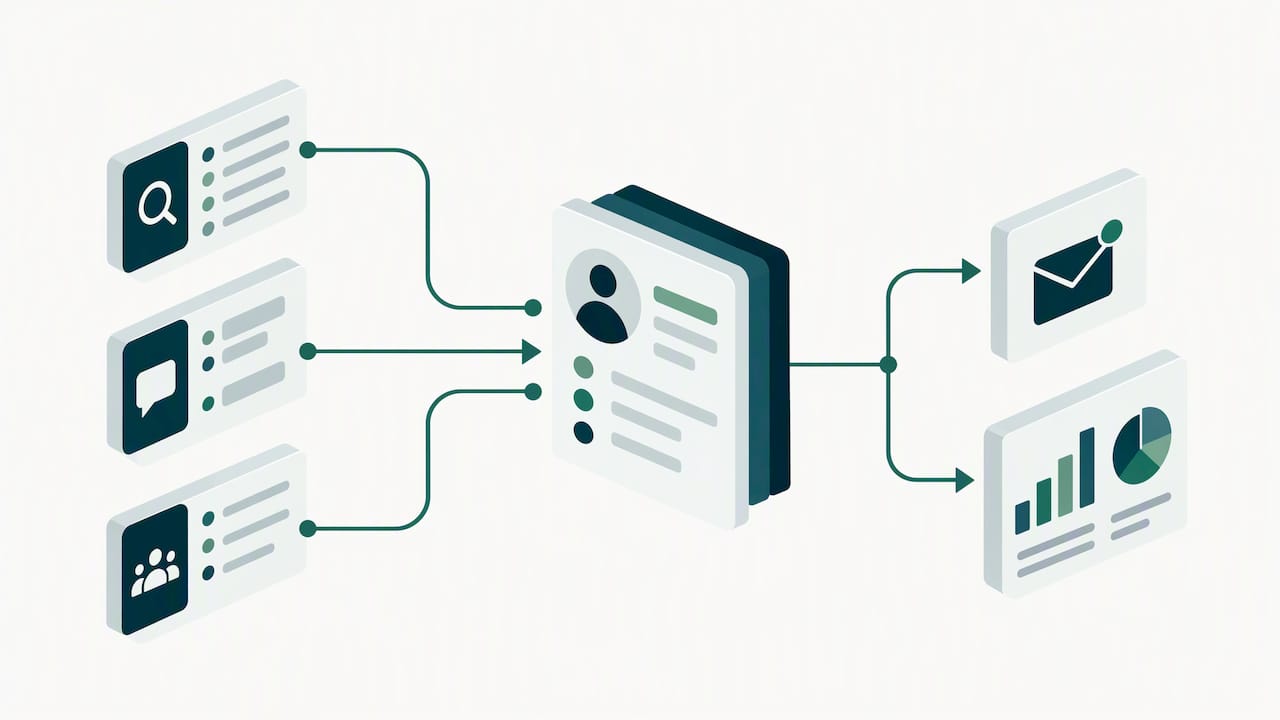
Consolidating the applicant tracking system, the candidate relationship management layer, and the sales or client pipeline into one view eliminates that reconciliation work entirely. A candidate’s status updates once and reflects everywhere a stakeholder looks, which matters enormously when a single requisition might involve a recruiter, a hiring manager, and an account lead who all need the same current picture.
AI scoring earns its place in this stack specifically because it turns a pile of resumes into a ranked shortlist based on how a candidate’s actual skill profile relates to a role’s requirements, not just whether a keyword appears on a page. That distinction separates a shortlist a recruiter can trust from one that still requires manual re-screening to catch obvious mismatches the algorithm missed.
- Recruitify Team
How Recruitify Supports High-Volume Hiring Without Growing Your Team
We built Recruitify to solve the exact friction points that slow down high-volume hiring: scattered systems, manual screening, and administrative work that eats a recruiter’s day before they ever talk to a candidate. Our platform consolidates an applicant tracking system, a sales CRM, and an IT contracting module into one workspace, so sourcing, screening, client communication, and contract generation all run from a single source of truth instead of a patchwork of spreadsheets and disconnected tools.
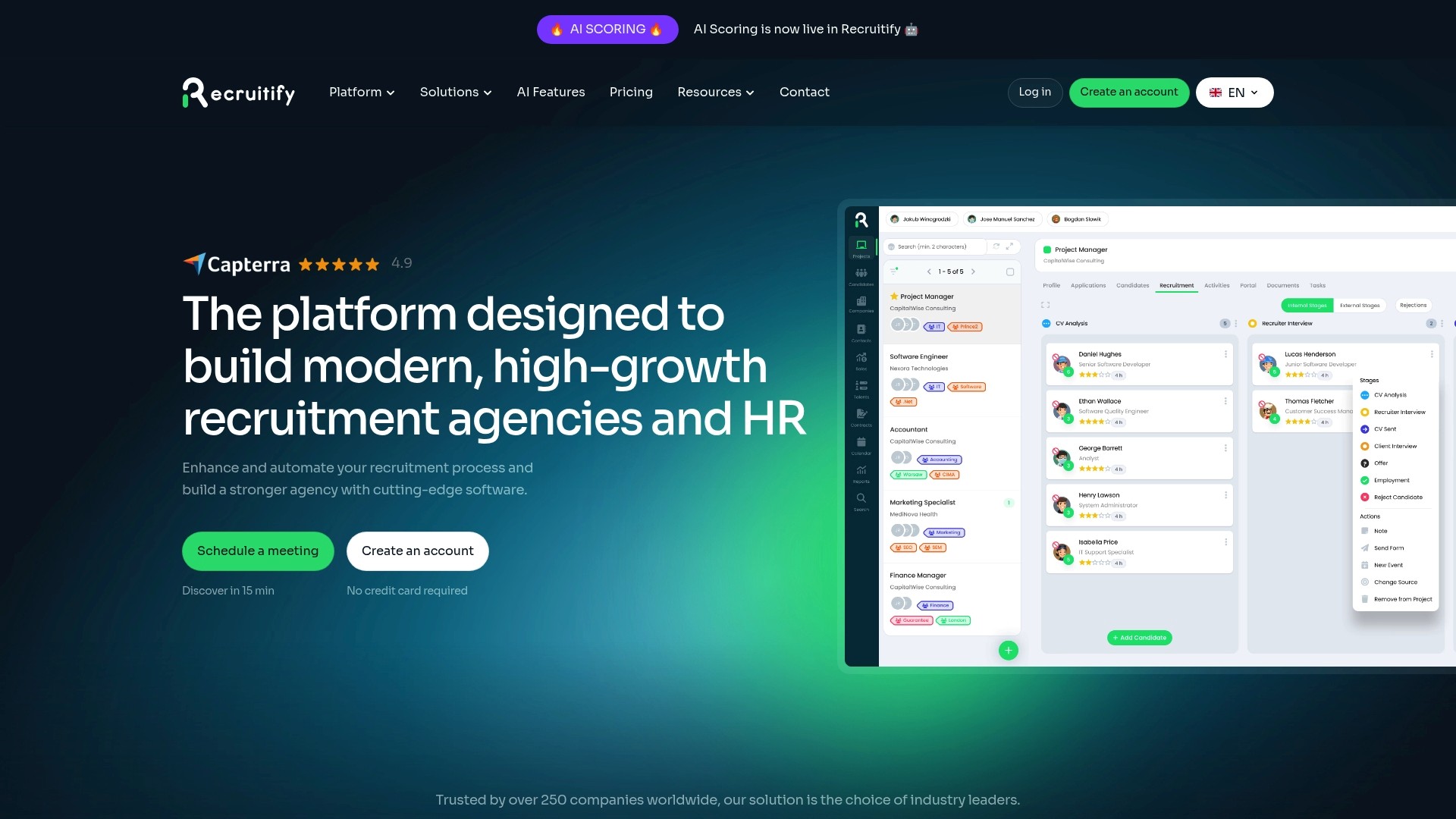
Our AI recruitment features include CV parsing with OCR that builds a structured candidate profile in seconds, contextual matching that ranks candidates against real project requirements rather than keyword overlap, and a blind CV module for generating anonymized profiles ready to share with clients. Our candidate management tools let you search and reactivate your existing database instead of paying for external sourcing licenses every time a new requisition opens. Every candidate record carries GDPR-aware consent tracking with a full audit trail, so compliance scales alongside volume rather than becoming a liability.
If you are evaluating whether a unified platform fits your hiring volume, our pricing page outlines the HR Team plan at €69 per user per month and the Recruitment Agencies plan at €79 per user per month; current pricing details are on our pricing page.
FAQ
What does “high-volume experience” mean on a resume or job posting?
High-volume experience refers to a recruiter’s or candidate’s background managing large numbers of applications, requisitions, or transactions within a fast-paced environment. For recruiters specifically, it typically means experience running structured, repeatable processes across dozens or hundreds of simultaneous openings rather than one-off searches.
What is the best recruiting firm to work with for high-volume hiring?
There is no single best firm for every situation, since the right choice depends on industry, location, and role type. The more useful question is whether a firm or platform supports structured interviewing, fast response times, and funnel tracking, since those factors are what research on structured interviewing ties to better hiring outcomes.
What is the 7-second rule for resumes?
The idea behind this commonly cited rule is that recruiters form an initial impression of a resume quickly, which is why clear formatting and relevant keywords near the top matter. Descriptions of the timing vary, but the underlying principle, that a resume needs to communicate fit quickly, matters in high-volume screening where recruiters review many applications.
What does “hiring” mean in the context of recruitment?
Hiring refers to the full process of identifying, evaluating, and formally bringing a candidate into a paid role, from the initial job posting through the signed offer and onboarding. In high-volume contexts, hiring is treated as a structured, multi-stage process with defined owners and timelines at each step rather than a single event.
How quickly should employers respond to high-volume applicants?
A first response within 24 hours is the standard that competitive employers aim for, since longer delays tend to push candidates toward other opportunities. SHRM benchmarking research also shows that top employers commonly disposition or move candidates to a next step within 3 to 5 days overall.
Sources
Eliminating Biases in Hiring: Structured Interviewing and AI Solutions
12 Key Takeaways from the 2024 Candidate Experience Benchmark Research | ERE
Recommended


News & Updates
Stay up-to-date with the latest innovations, features, and tips about Recruitify!
By providing your email address within the newsletter sign-up form, you confirm its processing to send marketing information regarding the Administrator’s products and services. The Administrator of your personal data processed for the abovementioned purposes is Recruitify Spółka z o.o., based in Warsaw, Poland (KRS 0000709889). For more information on the principles of personal data processing and the rights of data subjects, please check the Privacy Policy.

Last updated:
High Volume Recruiting for TA Leaders: Scale Without More Recruiters
Legal and Compliance in HR
The Recruitify Team
High-volume recruiting means filling many roles at once, often dozens or hundreds of positions in a short window, without the luxury of treating each hire as a bespoke process. Doing it well requires standardizing every stage, automating the repetitive steps, and tracking funnel metrics closely enough to catch quality slipping. The first move: set a 24-hour first-response service level agreement and automate initial screening so no candidate waits in silence.
Recruitifyrecruitify.aiScale Recruiting Without More AdminRecruitify brings ATS, sales CRM, and IT contracting tools together, with AI matching and CV parsing to reduce repetitive recruitment work.Explore Recruitify
Key Takeaways
High-volume recruiting relies on standardized, automated, and tracked processes to quickly attract, assess, and hire large numbers of candidates without sacrificing quality.
Point | Details |
|---|---|
Structured sourcing | Using layered sourcing channels like referrals, campus partnerships, and programmatic ads keeps the candidate funnel full and reduces dependence on single sources. |
Fast response times | Responding to candidates within 24 hours and providing timely disposition updates enhances the employer brand and keeps candidates engaged. |
Automated screening | CV parsing, pre-screen assessments, and structured interviews help filter candidates efficiently while maintaining quality standards. |
Unified automation platform | A single system like Recruitify consolidates sourcing, screening, and candidate management, reducing manual work and improving data accuracy. |
Streamlined candidate experience | Standardized interview guides, clear communication SLAs, and quick feedback improve fairness and candidate satisfaction. |
Table of Contents
When High-Volume Recruiting Makes Sense and How the Process Works
Proven Sourcing and Outreach Strategies That Scale
Screening and Assessment at Scale Without Losing Quality
Technology and Automation: What to Implement and Why
Key Metrics and Funnel Health to Measure Success
Candidate Experience and Fairness at Scale
Operational Design: Workflows, Roles, and Scaling the Process
Common Challenges and Practical Mitigations
How a Unified Platform Changes the Math on Scale
How Recruitify Supports High-Volume Hiring Without Growing Your Team
FAQ
Sources
When High-Volume Recruiting Makes Sense and How the Process Works
Not every hiring push qualifies as high-volume recruiting, and treating a handful of specialized roles with the same playbook built for mass hiring wastes effort. The approach earns its keep in specific situations: rapid headcount expansion after funding or contract wins, seasonal demand spikes in retail or logistics, new site or market launches that need dozens of staff simultaneously, and ongoing churn-heavy roles like call center or warehouse positions that require a constant hiring motion rather than a one-time push.
Once you decide the volume justifies a different approach, the process needs clear stages, each with its own owner and timing expectations rather than a single generic pipeline stretched thin:
Attraction: job postings, programmatic ads, and referral campaigns generate top-of-funnel volume.
Application: a frictionless apply flow, often mobile-first or text-based, captures candidates before they abandon the process.
Screening: automated parsing and triage rules sort candidates by fit before any human touches a resume.
Interview: structured guides and standardized scoring replace ad hoc conversations.
Offer: fast, templated offer generation closes the loop before candidates accept elsewhere.
Onboarding: pre-start engagement keeps accepted candidates from ghosting on day one.
Each stage needs a time standard attached to it. A first-response SLA under 24 hours is the baseline that separates competitive employers from slow ones, since candidates who hear nothing within a day often assume rejection and move on. Disposition timelines matter just as much: candidates who are not advancing should be notified within a few business days rather than left in limbo, which protects both your employer brand and your pipeline’s integrity for future openings.
Proven Sourcing and Outreach Strategies That Scale
Volume hiring lives or dies on the sourcing mix. Relying on a single channel, usually job boards, caps your reach and drives up cost-per-application as the easy candidates get absorbed. A layered approach spreads risk and keeps the top of the funnel full even when one channel underperforms.
Build a structured employee referral program. Set a clear incentive tied to successful onboarding rather than just acceptance, and give employees a simple way to submit candidates directly into your pipeline instead of emailing resumes around.
Run campus partnerships and job fairs with a measurement plan. Track applications, interviews, and hires per event so you can rank which schools or fairs actually convert, then reallocate budget toward the ones that work.
Use programmatic job advertising for roles with unpredictable demand. Programmatic platforms shift budget automatically toward postings that generate applications, which keeps cost-per-application in check compared to static job board listings.
Launch targeted social campaigns for niche communities. A warehouse role and a software engineering role need different platforms, different messaging, and different proof points, so avoid running one generic ad across every channel.
Source proactively with X-ray and Boolean search. Pulling passive candidates from the open web or your own database fills gaps that inbound applications alone cannot cover, especially for specialized or hard-to-fill roles.
Sequence outreach across multiple touches. A single email rarely moves a passive candidate; a sequence of touches across email, text, and a follow-up call can perform better than one-off contact attempts.
Referral programs deserve particular attention because they consistently produce candidates who stay longer and ramp faster, since the referring employee has effectively pre-screened for culture fit. The mechanics matter: a referral form embedded directly in your recruitment automation workflow removes the friction of a separate submission process, and automated status updates to the referring employee keep them engaged in future rounds.
Campus and job fair programs only pay off when you treat them like a channel to optimize rather than a relationship to maintain out of habit. If a career fair yields twelve applications and zero hires two years running, that budget belongs somewhere else.
Programmatic advertising earns its place in the stack specifically because it removes the guesswork of manual bid management across dozens of job postings at once. For a single role, manual posting works fine. For fifty simultaneous openings across multiple locations, a programmatic platform reallocates spend toward the postings and channels that are actually converting, which matters when every day a seat sits open costs money.
Social and niche-community outreach works best when the message matches the audience. A recruiting message aimed at recent nursing graduates reads differently than one aimed at experienced forklift operators, and treating them identically signals a generic, impersonal process that candidates notice.
Pro Tip: Pair every outreach sequence with a clear subject line that states the role and location upfront, since mobile notification previews cut off longer text.
Proactive sourcing through compliant automated candidate outreach closes the gap between the candidates who apply and the candidates who could be a fit but never see your posting. A well-built X-ray search string pulls relevant profiles from public platforms and your own historical database simultaneously, and automated outreach sequences keep that pipeline warm without requiring a recruiter to draft each message by hand.
Screening and Assessment at Scale Without Losing Quality
The biggest risk in high-volume recruiting is letting speed erode the quality bar, and screening is where that trade-off either gets managed or gets ignored. The goal is to filter thousands of applicants down to a manageable shortlist without manually reading every resume.
Use CV parsing with structured triage rules. Automatically extracting skills, experience, and certifications lets you route candidates into tiers before a recruiter opens a single file.
Deploy short pre-screen assessments or recorded video responses. A brief screen or recorded answer can filter out mismatched candidates before they consume live interview time.
Implement blind or anonymized CV review. Removing names, photos, and other identifying details from initial screening reduces the influence of unconscious bias on who advances.
Set explicit scoring thresholds. Define what score moves a candidate forward automatically, what score triggers manual review, and what score results in a polite decline.
Recycle strong “no” candidates into a nurture stream. A candidate who scores well but loses to a slightly stronger applicant today may be the right fit for next month’s opening.
Structured interviewing complements automated screening rather than replacing it. SHRM’s discussion of structured interviewing and AI tools found that competency-based interview playbooks reduce bias and lower the cost of bad hires, which matters at volume since a single mis-hire multiplied across dozens of similar roles compounds quickly. Building one standardized interview guide per role family, rather than letting each hiring manager improvise, keeps the evaluation consistent even as different recruiters run the interviews.
Borderline candidates deserve a defined process rather than an ad hoc decision made under time pressure. A clear rule, such as routing borderline candidates to a second reviewer, keeps judgment calls consistent across a team handling a high volume of applications.
Pro Tip: Store declined candidates with their scoring data intact, not just a rejection flag, so a future search can resurface them without starting the evaluation from scratch.
Recycling candidates matters more in high-volume hiring than almost anywhere else in recruiting, because the sheer number of applicants means strong talent gets passed over constantly simply due to timing. An indexed, searchable database of past applicants turns those near-misses into a sourcing channel you already paid to build.
Technology and Automation: What to Implement and Why
The technology stack determines whether a team can actually execute the playbook above or just describes it in a strategy document. At volume, manual processes break down fast, and the components that deliver the most leverage share a common thread: they remove repetitive work from a recruiter’s day without removing the recruiter’s judgment from the decisions that matter.
Applicant tracking system (ATS): the backbone that holds every candidate record, stage, and interaction in one place rather than scattered across inboxes and spreadsheets.
CRM for passive talent: keeps sourced-but-not-yet-applied candidates warm and searchable for future openings.
Talent-pool search: lets recruiters query the existing database instead of starting every search from zero.
Outreach automation: sends sequenced, templated messages at scale while still allowing personalization fields.
Programmatic ad platforms: manage budget allocation across job postings automatically.
Among AI capabilities, three stand out for high-volume specifically. CV parsing with OCR technology extracts structured data from resumes, scans, and even photos, turning an unstructured document into a searchable profile in seconds rather than requiring manual data entry. Contextual matching and scoring goes beyond keyword search by evaluating how a candidate’s actual experience relates to a role’s requirements, which produces a ranked shortlist instead of a flat list of keyword hits. Chatbots handle initial application questions and basic screening conversations around the clock, which matters when candidates apply outside business hours and expect a response before they move on to the next listing.
The integration principle underneath all of this: a single source of truth for candidate data. When sourcing, screening, and interview data live in separate systems, recruiters waste time reconciling records, and candidates slip through cracks between handoffs. Unifying the pipeline, as described in guidance on orchestrating recruitment workflow automation, means a candidate’s status updates once and reflects everywhere, from the recruiter’s dashboard to the automated outreach sequence to the reporting layer.
Security and compliance cannot be an afterthought bolted on later. GDPR-aware consent tracking needs to capture when and how a candidate consented to having their data stored and processed, and a full audit trail needs to document every access and change to that record. This matters more, not less, as volume increases, since manual compliance tracking across thousands of records is where gaps appear fastest.
Key Metrics and Funnel Health to Measure Success
Speed without measurement is just a guess, and high-volume recruiting generates enough data that tracking the right numbers is both possible and necessary. A handful of primary KPIs matter more than the rest.
Time-to-first-response: a prompt first response helps employers stay competitive, and SHRM benchmarking research shows top employers commonly disposition or move candidates within 3 to 5 days overall.
Panel-to-offer rate: the percentage of candidates who reach a final interview panel and receive an offer, which reveals whether your screening stage is calibrated correctly.
Offer-acceptance rate: a declining rate often signals a compensation, speed, or candidate experience problem upstream.
Quality-of-hire: typically measured through performance ratings or retention over time, this is an important metric for validating the rest of the hiring process.
Top employers commonly move or disposition candidates within 3 to 5 days, and that pace is what separates a competitive hiring process from one that loses candidates to faster-moving employers.
Secondary metrics round out the picture: cost-per-hire, source conversion rates by channel, and pipeline yield at each stage help diagnose where a funnel is leaking rather than just confirming that it is. Raw application counts are the classic vanity metric, since a flood of applications from a poorly targeted job ad looks impressive on a dashboard while actually increasing screening workload without improving hire quality. True funnel health shows up in conversion rates between stages, not in top-of-funnel volume alone.
A weekly reporting cadence works for most high-volume operations, with alerts triggered when a KPI drops outside its normal range, for example if first-response time creeps past 24 hours or panel-to-offer rate falls below the historical baseline for a role family. Tracking these numbers consistently, as outlined in guidance on recruitment funnel metrics that predict hires, turns reporting from a retrospective exercise into an early warning system.
Candidate Experience and Fairness at Scale
Volume and fairness are not in tension when the process is built correctly, but they do require deliberate design rather than hoping good intentions carry through under time pressure.
Adopt structured interview guides with standardized scoring. Every candidate for a given role answers the same core questions evaluated against the same rubric, which reduces the variability that lets bias creep in.
Set firm communication SLAs. A candidate who hears nothing for too long after an interview may assume the worst and withdraw before a decision is made.
Use chatbots and text-to-apply for faster engagement. These tools, according to SHRM benchmarking data, materially improve candidate application net promoter scores because they meet candidates where they already are instead of forcing a desktop-only application flow.
Collect feedback before the start date, not just after exit. A short survey sent after the offer stage but before day one surfaces friction points while they are still fixable for the next cohort.
ERE’s 2024 Candidate Experience Benchmark Research found that employers recognized for strong candidate experience favor structured processes and faster dispositions, and that candidates report higher perceived fairness and greater willingness to refer others when the process moves quickly and communicates clearly. That finding matters directly for high-volume recruiting, where the sheer number of candidates touched means even small experience failures multiply across thousands of interactions.
Pro Tip: Send a one-question feedback survey immediately after the interview stage, asking only how clear the process felt, since a single question gets a far higher response rate than a full survey.
Fairness at scale is less about any single safeguard and more about consistency. A structured process applied to every candidate, even imperfectly, outperforms an unstructured process applied with the best intentions, because the structure is what prevents fatigue and time pressure from introducing inconsistent judgment later in a long hiring day.
Operational Design: Workflows, Roles, and Scaling the Process
A playbook only works when someone owns each piece of it, and high-volume hiring tends to expose gaps in ownership faster than low-volume hiring because there is no slack in the system to absorb confusion.
Assign a clear owner to each stage. Sourcing, screening, interviewing, and offer generation each need one accountable role, even if that role is shared across a team, so a dropped candidate has an obvious person to flag it to.
Define SLAs for every handoff. Set and track a clear time expectation for candidates moving from screening to interview scheduling.
Map automation triggers and exception paths. Automation handles the standard path well, but every workflow needs a defined exception route for candidates who do not fit the standard pattern, so they are not simply lost.
Forecast hiring needs against channel yields. When filling warehouse roles, use a job board’s historical conversion rate to guide how early sourcing starts, rather than guesswork.
Build talent pools and nurture streams ahead of demand. A pool of previously screened, qualified candidates lets a team absorb a sudden hiring spike without scrambling to source from zero.
Project-based coordination helps here, particularly for agencies managing multiple simultaneous high-volume searches. Structuring each hiring initiative as its own tracked project, similar to the approach described for controlling the hiring process through recruitment projects, keeps stage ownership and SLA tracking visible rather than buried inside a generic pipeline view where fifty roles blur together.
Capacity planning deserves more attention than it typically gets. A recruiter may not be able to manage a much larger number of open requisitions without automation absorbing repetitive work or quality slipping somewhere in the process. Talent pools built proactively, before the next hiring spike hits, are what let a team absorb peaks without adding headcount to the recruiting function itself.
Common Challenges and Practical Mitigations
A few failure patterns show up repeatedly in high-volume recruiting, and each has a direct fix rather than requiring a wholesale process redesign.
Quantity outpacing quality: when the top of the funnel grows faster than screening capacity, tighten scoring thresholds and add a mandatory second review for any candidate who clears the bar only marginally.
Bias creeping into fast decisions: recorded interviews and structured panel reviews catch inconsistencies that a single rushed interviewer might miss, and reviewing a sample of decisions weekly keeps the standard consistent.
Candidate drop-off between stages: faster dispositions and automated text reminders about upcoming interviews or next steps reduce the silent attrition that happens when candidates simply lose track of where they stand.
Duplicate and stale records cluttering the database: automated duplicate detection during CV parsing prevents the same candidate from entering the pipeline twice under slightly different resume versions, and periodic reactivation campaigns surface candidates who went cold months ago but may be available again now.
Each of these problems tends to compound the others. Duplicate records waste screening capacity that could go toward genuine candidates, which worsens the quality-versus-quantity imbalance, which then increases the time pressure that makes biased shortcuts more likely. Fixing data hygiene first often has an outsized effect on the other three, since a cleaner database means every downstream stage works with better information.
How a Unified Platform Changes the Math on Scale
The pattern across every challenge above, information scattered across systems, handoffs that drop candidates, screening that cannot keep pace with volume, points to the same root cause: fragmented tooling. When sourcing data lives in one system, candidate communication lives in another, and client or hiring manager updates live in a third, a recruiter spends more time reconciling records than actually recruiting.
Consolidating the applicant tracking system, the candidate relationship management layer, and the sales or client pipeline into one view eliminates that reconciliation work entirely. A candidate’s status updates once and reflects everywhere a stakeholder looks, which matters enormously when a single requisition might involve a recruiter, a hiring manager, and an account lead who all need the same current picture.
AI scoring earns its place in this stack specifically because it turns a pile of resumes into a ranked shortlist based on how a candidate’s actual skill profile relates to a role’s requirements, not just whether a keyword appears on a page. That distinction separates a shortlist a recruiter can trust from one that still requires manual re-screening to catch obvious mismatches the algorithm missed.
- Recruitify Team
How Recruitify Supports High-Volume Hiring Without Growing Your Team
We built Recruitify to solve the exact friction points that slow down high-volume hiring: scattered systems, manual screening, and administrative work that eats a recruiter’s day before they ever talk to a candidate. Our platform consolidates an applicant tracking system, a sales CRM, and an IT contracting module into one workspace, so sourcing, screening, client communication, and contract generation all run from a single source of truth instead of a patchwork of spreadsheets and disconnected tools.
Our AI recruitment features include CV parsing with OCR that builds a structured candidate profile in seconds, contextual matching that ranks candidates against real project requirements rather than keyword overlap, and a blind CV module for generating anonymized profiles ready to share with clients. Our candidate management tools let you search and reactivate your existing database instead of paying for external sourcing licenses every time a new requisition opens. Every candidate record carries GDPR-aware consent tracking with a full audit trail, so compliance scales alongside volume rather than becoming a liability.
If you are evaluating whether a unified platform fits your hiring volume, our pricing page outlines the HR Team plan at €69 per user per month and the Recruitment Agencies plan at €79 per user per month; current pricing details are on our pricing page.
FAQ
What does “high-volume experience” mean on a resume or job posting?
High-volume experience refers to a recruiter’s or candidate’s background managing large numbers of applications, requisitions, or transactions within a fast-paced environment. For recruiters specifically, it typically means experience running structured, repeatable processes across dozens or hundreds of simultaneous openings rather than one-off searches.
What is the best recruiting firm to work with for high-volume hiring?
There is no single best firm for every situation, since the right choice depends on industry, location, and role type. The more useful question is whether a firm or platform supports structured interviewing, fast response times, and funnel tracking, since those factors are what research on structured interviewing ties to better hiring outcomes.
What is the 7-second rule for resumes?
The idea behind this commonly cited rule is that recruiters form an initial impression of a resume quickly, which is why clear formatting and relevant keywords near the top matter. Descriptions of the timing vary, but the underlying principle, that a resume needs to communicate fit quickly, matters in high-volume screening where recruiters review many applications.
What does “hiring” mean in the context of recruitment?
Hiring refers to the full process of identifying, evaluating, and formally bringing a candidate into a paid role, from the initial job posting through the signed offer and onboarding. In high-volume contexts, hiring is treated as a structured, multi-stage process with defined owners and timelines at each step rather than a single event.
How quickly should employers respond to high-volume applicants?
A first response within 24 hours is the standard that competitive employers aim for, since longer delays tend to push candidates toward other opportunities. SHRM benchmarking research also shows that top employers commonly disposition or move candidates to a next step within 3 to 5 days overall.
Sources
Eliminating Biases in Hiring: Structured Interviewing and AI Solutions
12 Key Takeaways from the 2024 Candidate Experience Benchmark Research | ERE
Recommended
News & Updates
Stay up-to-date with the latest innovations, features, and tips about Recruitify!
By providing your email address within the newsletter sign-up form, you confirm its processing to send marketing information regarding the Administrator’s products and services. The Administrator of your personal data processed for the abovementioned purposes is Recruitify Spółka z o.o., based in Warsaw, Poland (KRS 0000709889). For more information on the principles of personal data processing and the rights of data subjects, please check the Privacy Policy.

Discover More

Recruitment Process
Shortlisting Criteria in Recruiting: How to Build a Fair Shortlist
Learn which shortlisting criteria to define before you review applications, how to score candidates consistently, and how many to put forward for interview.
29 Oct 2026
Discover More

Recruitment Process
Recruitment Software ROI: How to Calculate It and What to Count
Learn how to calculate recruitment software ROI and ATS total cost of ownership, with a worked example, the metrics to track and the mistakes that skew results.
28 Oct 2026
Discover More

Recruitment Process
Full Desk Recruiting: How the 360 Model Works and What It Takes
Full desk recruiting explained: what a 360 recruiter does, how many reqs one person can carry, and how to plan capacity so the model scales without burnout.
27 Oct 2026
Discover More
Recruitment Process
Shortlisting Criteria in Recruiting: How to Build a Fair Shortlist
Learn which shortlisting criteria to define before you review applications, how to score candidates consistently, and how many to put forward for interview.
29 Oct 2026
Discover More
Recruitment Process
Recruitment Software ROI: How to Calculate It and What to Count
Learn how to calculate recruitment software ROI and ATS total cost of ownership, with a worked example, the metrics to track and the mistakes that skew results.
28 Oct 2026
Discover More